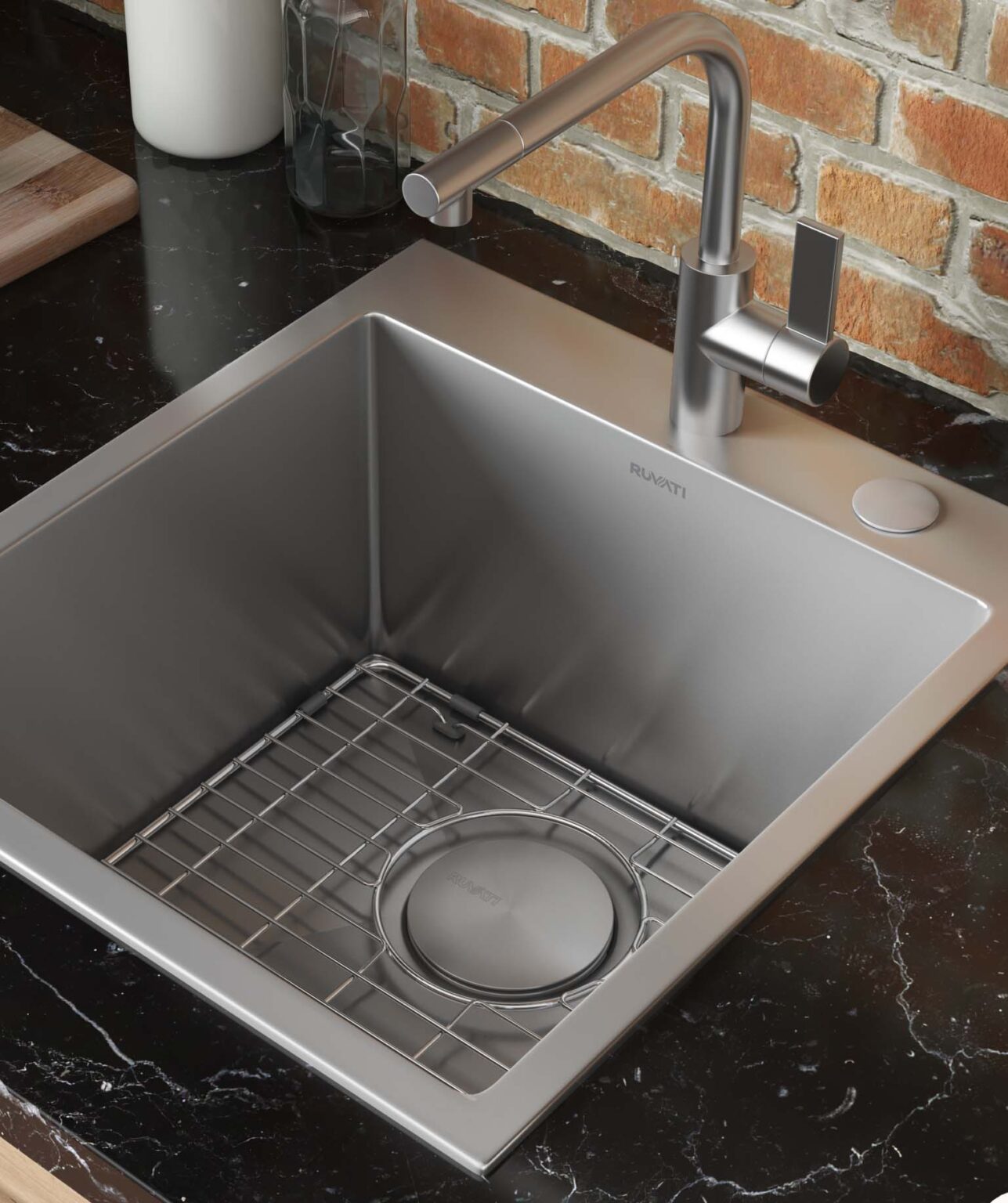
Low divide kitchen sinks are gaining popularity among homeowners seeking a versatile, functional, and stylish option for their culinary spaces. A low divider sink features a divider that stops short of the sink’s top, combining the benefits of both single and double basin sinks. There are various sink styles available, including low divide sinks, each offering unique features and enhancing kitchen functionality. In this article, we’ll explore the benefits, potential drawbacks, and cleaning tips for these innovative sinks, helping you determine if a low divide sink is the perfect fit for your kitchen.
What is a Low Divide Kitchen Sink?
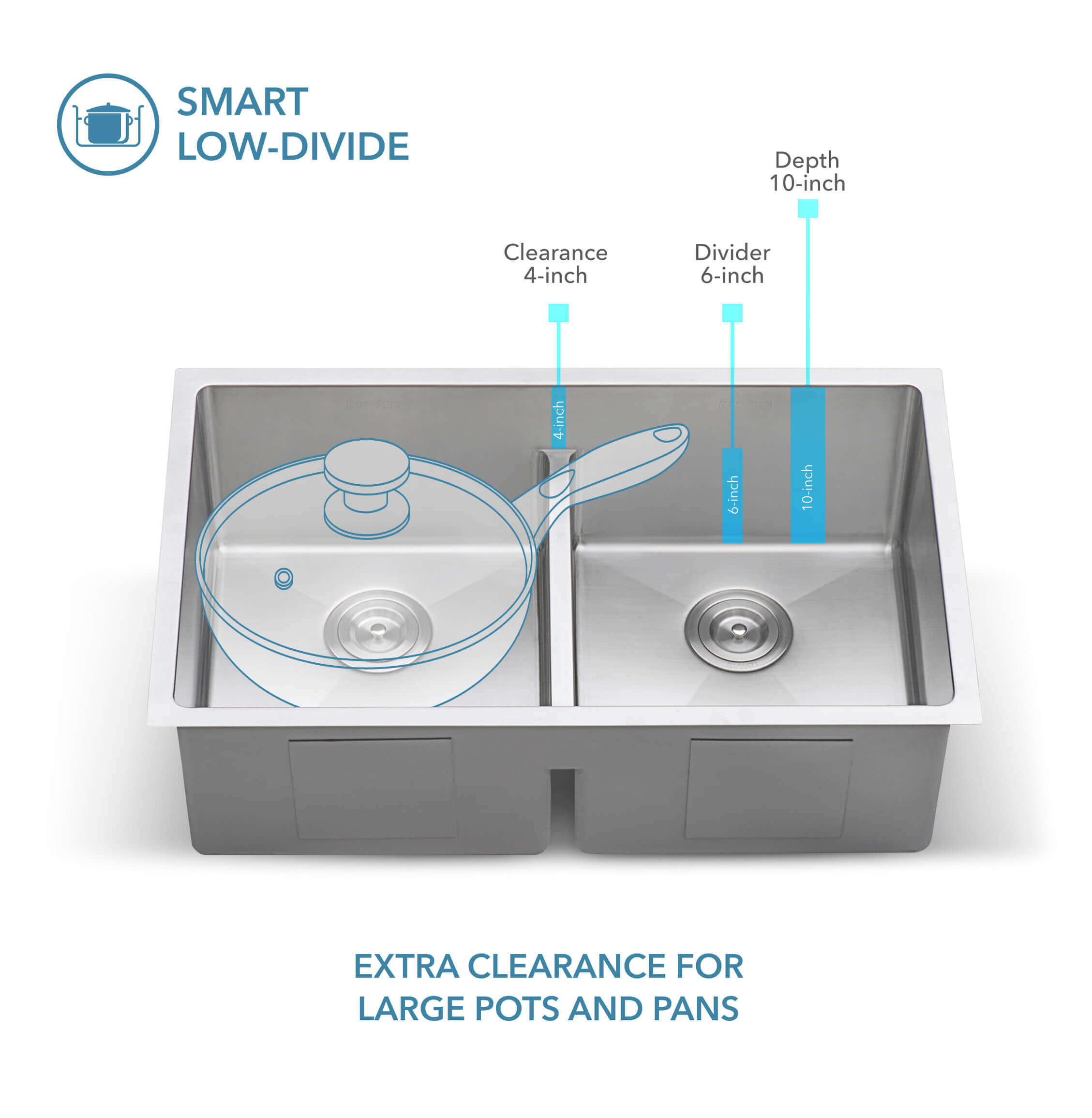
The center divider sits four inches below the top of the rim, providing ample clearance for washing large pots and pans while maintaining the convenience of a divided sink. Compared to a double sink, which allows one side for washing and the other for rinsing, but may have size limitations for larger cookware, and single basin sinks, which offer more space for large items and are suitable for busy households but lack the flexibility of a divided sink, the low divide sink combines features of both, catering to different household needs and preferences. This design provides a balance between workspace and multitasking capabilities, making it an attractive choice for modern kitchens.
When choosing a kitchen sink, it’s essential to consider how its design impacts daily usage. Here are the in-depth pros and cons of low divide kitchen sinks from the perspective of someone who values both form and function in their culinary space.
Pros
- Versatile Workspace: Low divide sinks provide an expansive workspace for handling large cookware, such as oversized pots, pans, and baking sheets, without the constraints of a high divide.
- Efficient Multitasking: The lowered partition allows you to transition seamlessly between tasks, like washing produce in one basin and cleaning dishes in the other, offering more flexibility compared to standard double basin sinks.
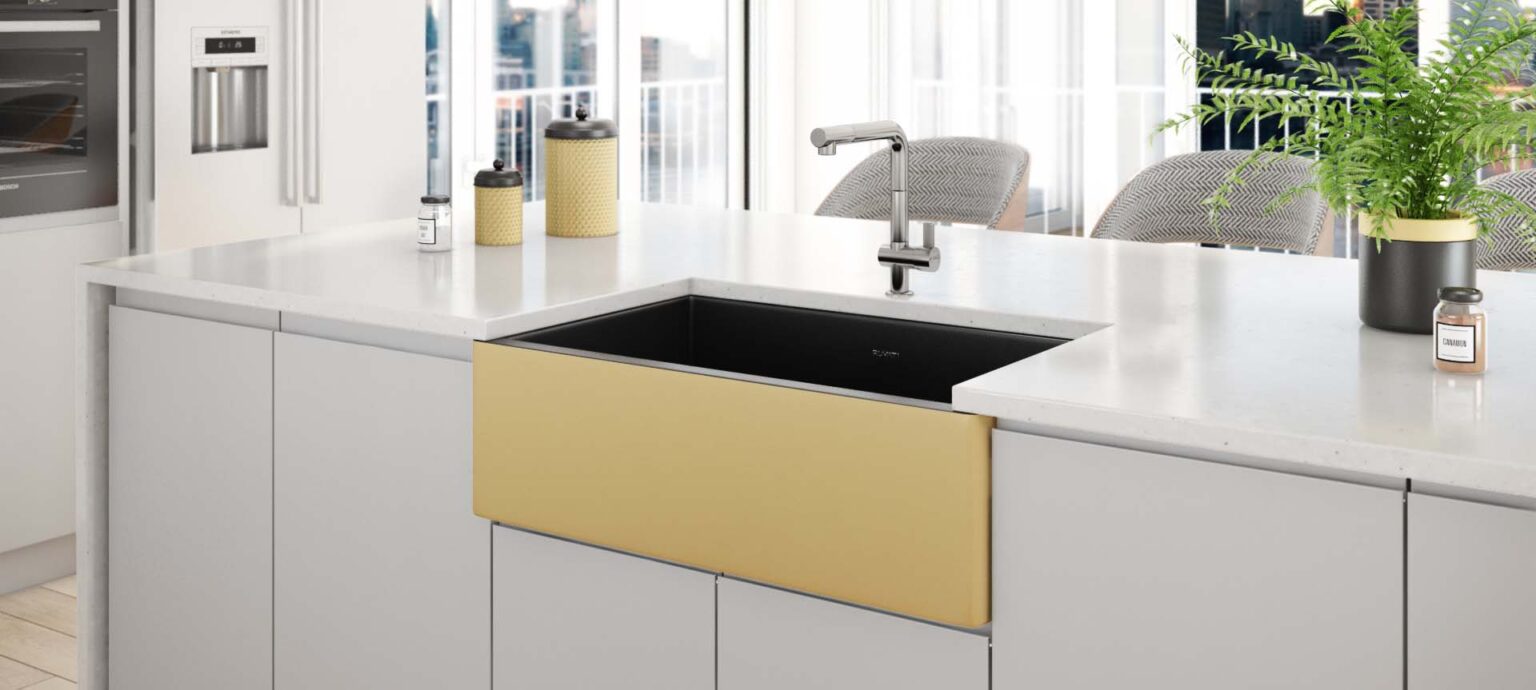
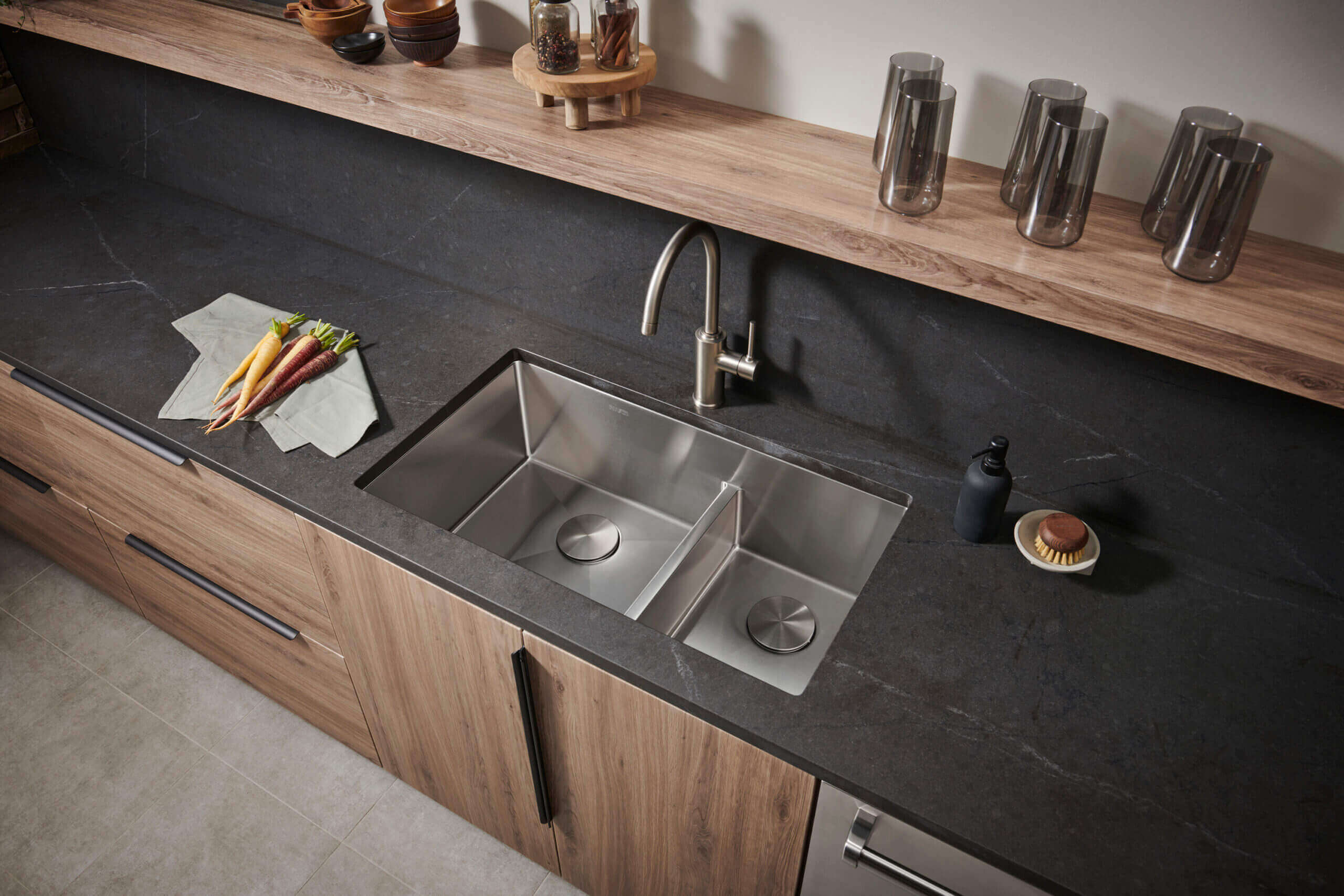
- Sleek and Modern Appearance: Low divide sinks blend the practicality of a double bowl sink with the visual appeal of a single basin, creating a contemporary focal point in your kitchen. Ruvati offers collections in stainless steel or granite that are sure to suit even the choosiest kitchen connoisseur.
- Enhanced Garbage Disposal Access: With a low divide sink, installing and accessing a garbage disposal is more convenient since there’s no need to navigate around a high partition.
- Easy Cleaning: The minimal divide simplifies the cleaning process, as food particles are less likely to get trapped along the partition. Additionally, the design facilitates washing dishes efficiently, making it ideal for families and social gatherings.
- Undermount Sink Benefits: An undermount sink, installed beneath the countertop, offers a seamless look and easy cleanup without a rim. This type of sink is aesthetically appealing and pairs well with low divide designs, though it may come with a higher price point and potential maintenance challenges.
Cons
- Limited Soaking Options: Low divide sinks may not be optimal for soaking dishes in separate basins, as water levels may need to be kept low to avoid overflow.
- Potential Water Splashing: With less separation between the basins, there’s a chance water may splash from one side to the other during tasks like rinsing or washing.
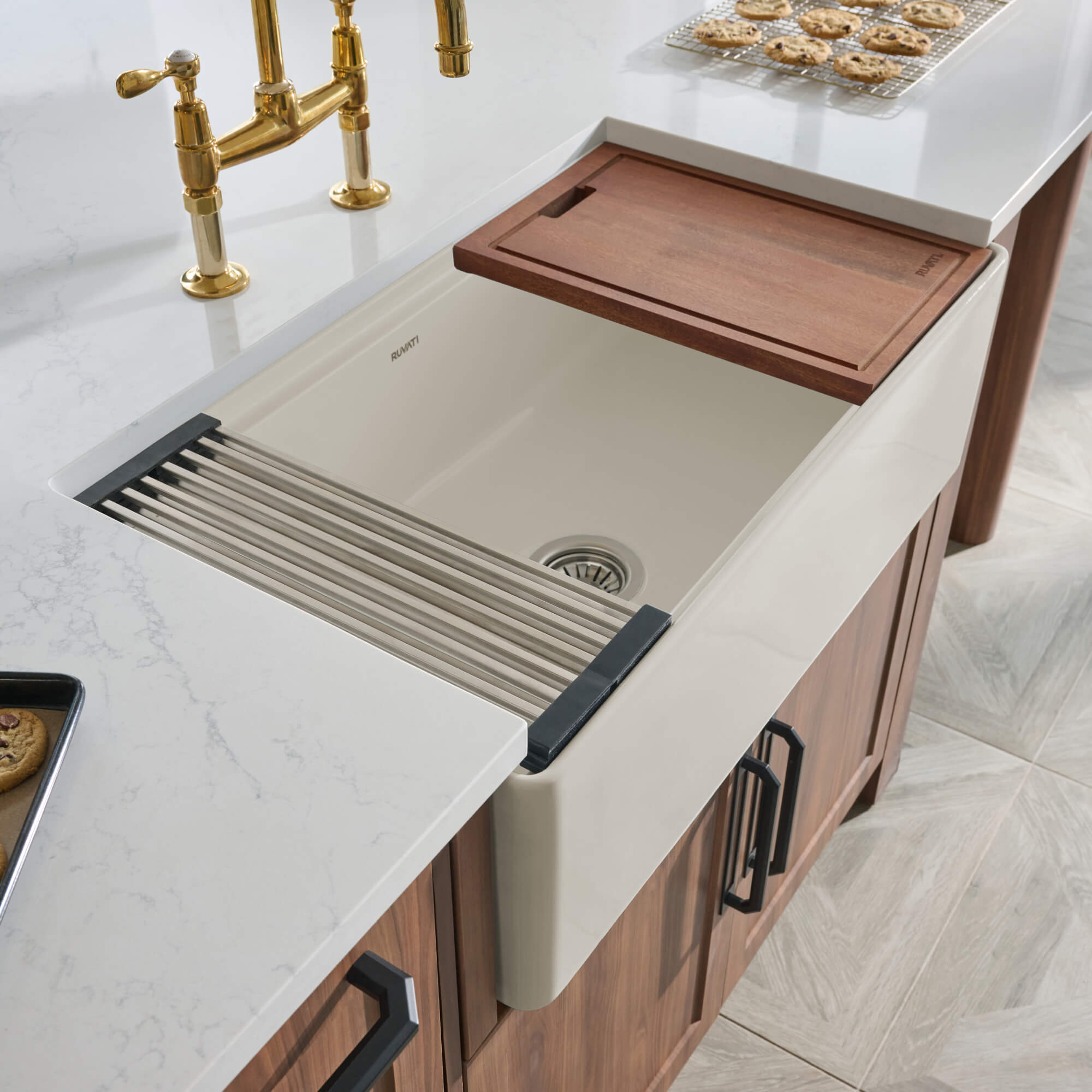
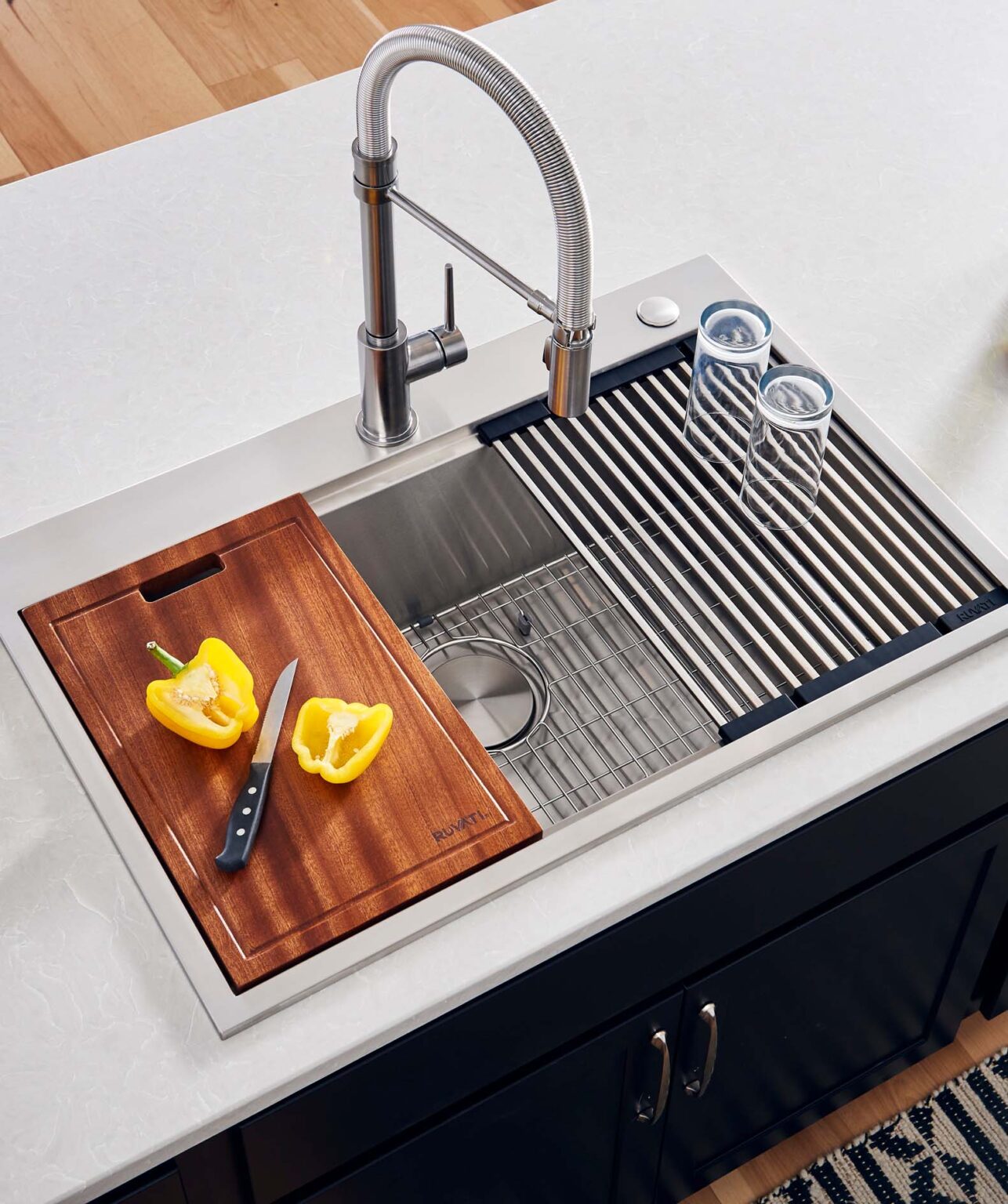
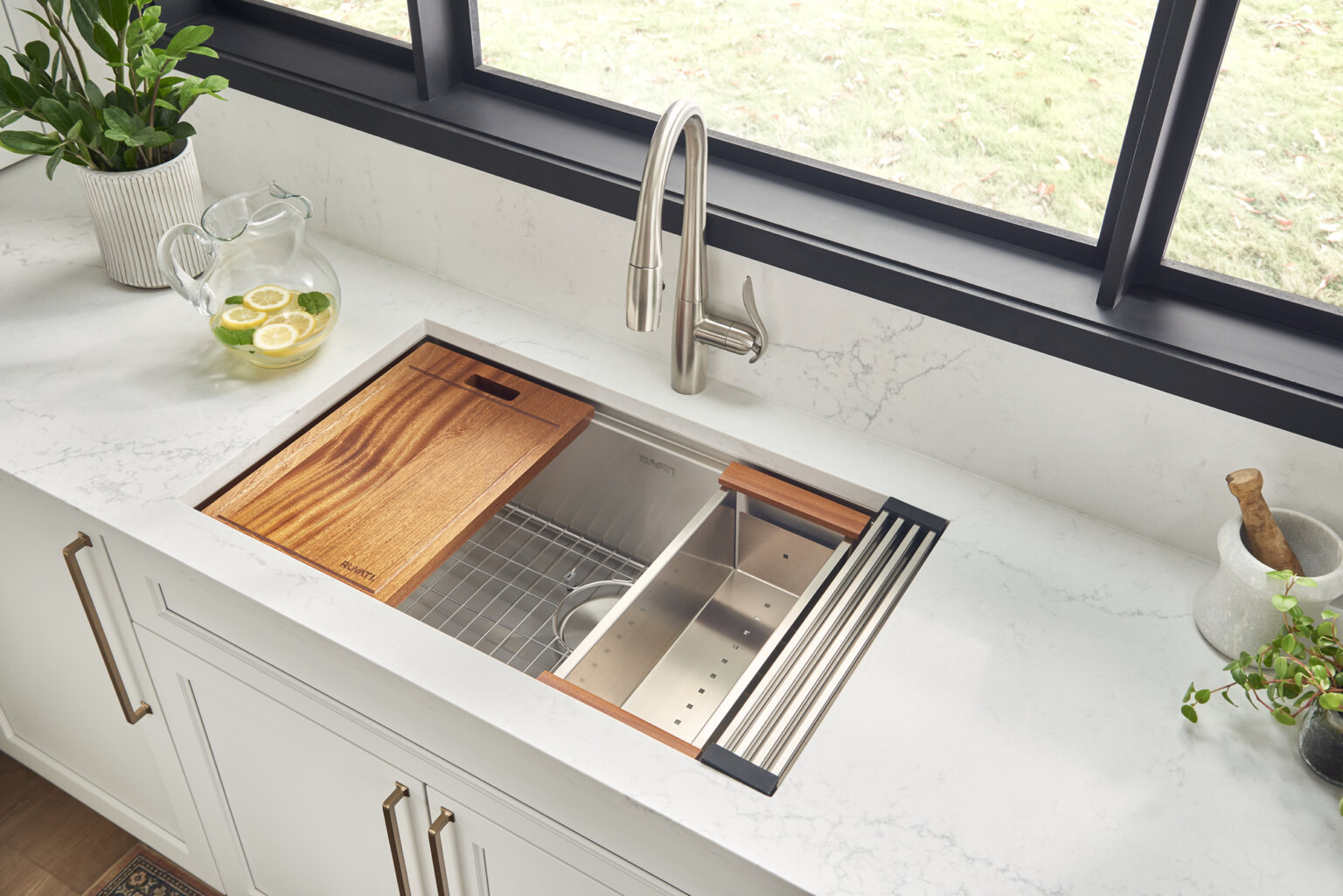
- Limited Accessory Compatibility: Some accessories designed for single or double bowl sinks, such as drying racks or cutting boards, may not fit or function optimally in a low divide sink. Fear not, Ruvati offers accessories such as the patented foldable drying rack, cutting board, and colander to compliment your low divide sink.
- Space Management: While offering a large workspace, low divide sinks may require more thoughtful organization to maximize efficiency, especially for those accustomed to the clear separation of double bowl sinks. Double sinks, while flexible and practical, can have drawbacks such as size limitations and may not suit everyone’s aesthetic preferences.
Low Divide Kitchen Sink Cleaning Tips
To keep your low divide sink looking its best, follow these simple cleaning tips:
- Regular Maintenance: Wipe down the sink after each use with a soft cloth or sponge and mild soap to prevent buildup.
- Deep Cleaning: Use a non-abrasive cleaner and a soft cloth to remove stains and mineral deposits. Avoid harsh chemicals or abrasive materials that could damage the sink’s finish.
- Disinfection: Sanitize the sink periodically by filling each basin with a solution of warm water and a mild bleach solution or disinfectant cleaner. Let it soak for a few minutes, then rinse thoroughly.
Discover the secrets to maintaining your sink’s showroom shine with our expert-approved care and maintenance guide, packed with essential tips and tricks to ensure a sparkling centerpiece for your kitchen.
FAQs
- Are low divide sinks a good idea?
Low divide sinks offer the benefits of both single and double bowl sinks, making them a great choice for homeowners seeking versatility and style in their kitchen. They help manage dirty dishes efficiently by allowing one side to hold dirty dishes while the other side is used for rinsing or cleaning tasks, similar to a double basin sink. However, unlike a double sink, low divide sinks provide more space for larger cookware, which can be a limitation for double sinks. On the other hand, double sinks offer flexibility and multi-purpose use for various kitchen tasks like washing, rinsing, and draining, but they may not accommodate larger items as easily as low divide sinks. The current design trend is moving towards single-basin sinks, but low divide sinks remain a popular choice for their balance of functionality and style.
- Is a divided sink better?
Whether a divided sink is better depends on your individual needs and preferences. A low divide sink can offer the best of both worlds by providing functionality and visual appeal.
- What are the advantages of farmhouse sinks compared to low divide sinks?
Farmhouse sinks are spacious and ideal for those who frequently cook and need ample room for pots and pans. They offer a different aesthetic and practical benefits compared to low divide sinks, which provide versatility and efficient management of dirty dishes.
- What are the benefits of undermount sinks and their compatibility with low divide designs?
Undermount sinks offer easy cleanup, a seamless appearance, and a higher quality compared to overmount sinks. They are compatible with low divide designs, providing a modern and functional kitchen setup.
- Why are stainless steel sinks popular and are they suitable for low divide designs?
Stainless steel sinks are popular due to their durability, easy maintenance, and compatibility with various countertop styles like granite. They are suitable for low divide designs, offering a balance of functionality and aesthetic appeal.
Low divide kitchen sinks provide a modern, stylish, and functional option for homeowners seeking to maximize their kitchen’s potential. Consider the benefits, potential drawbacks, and cleaning tips to determine if a low divide sink is the ideal choice for your culinary space.