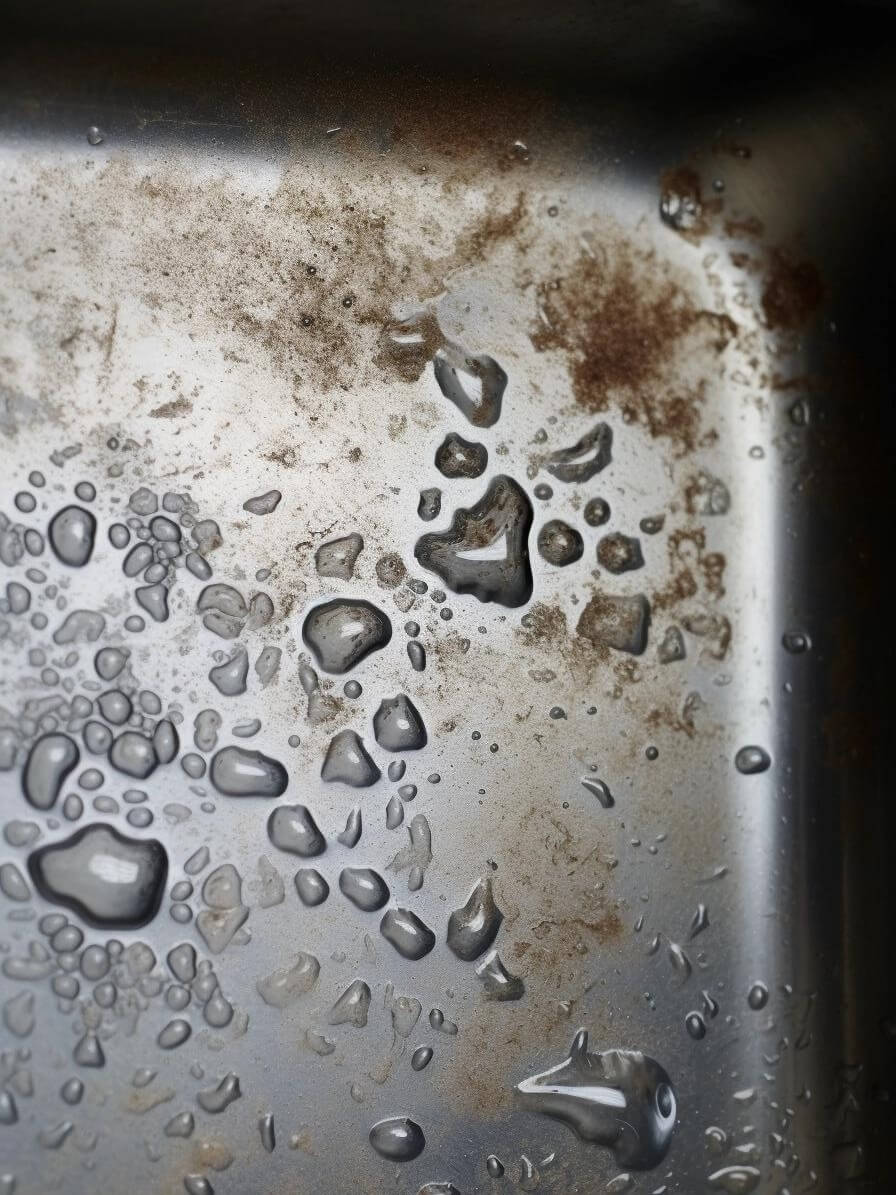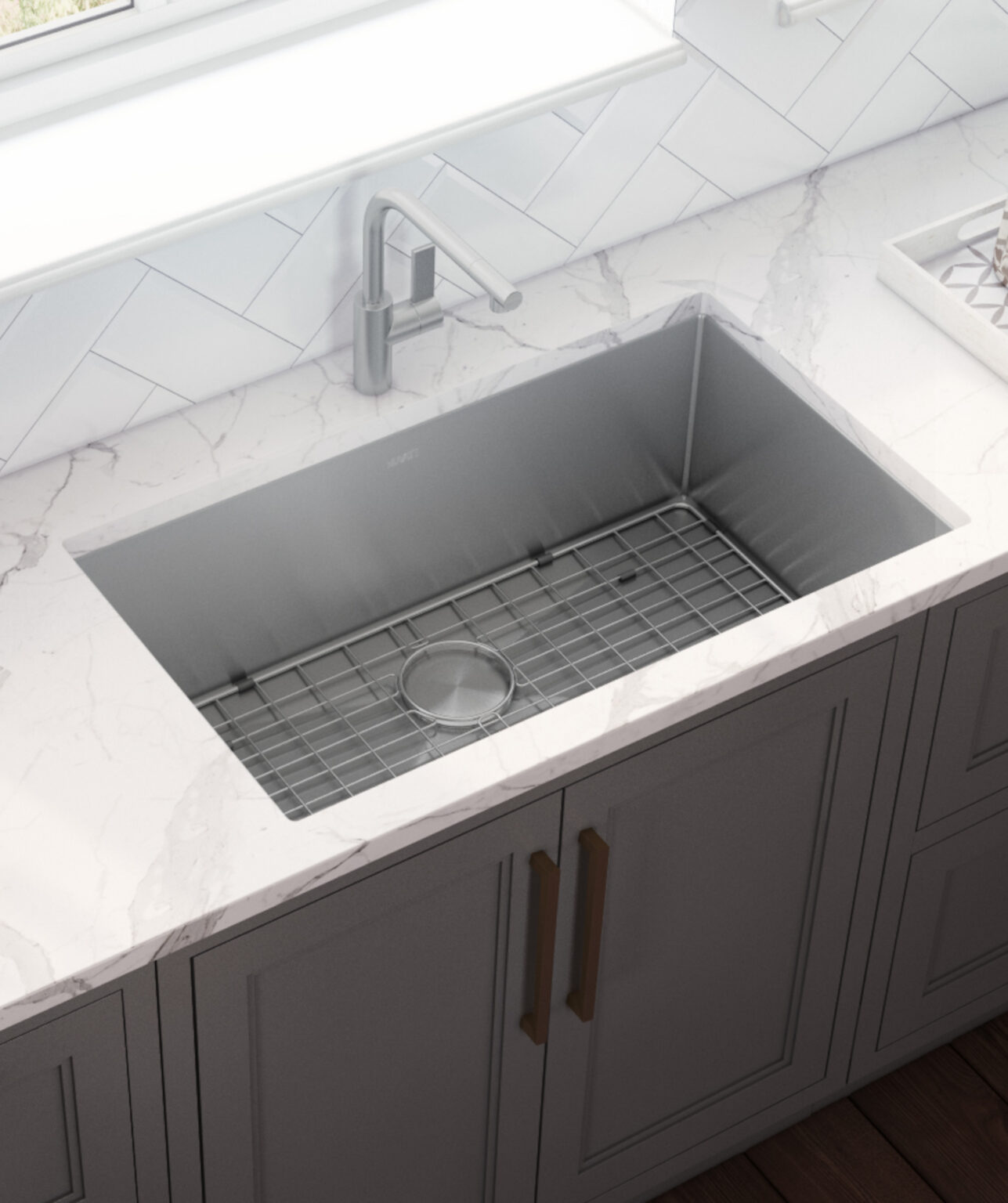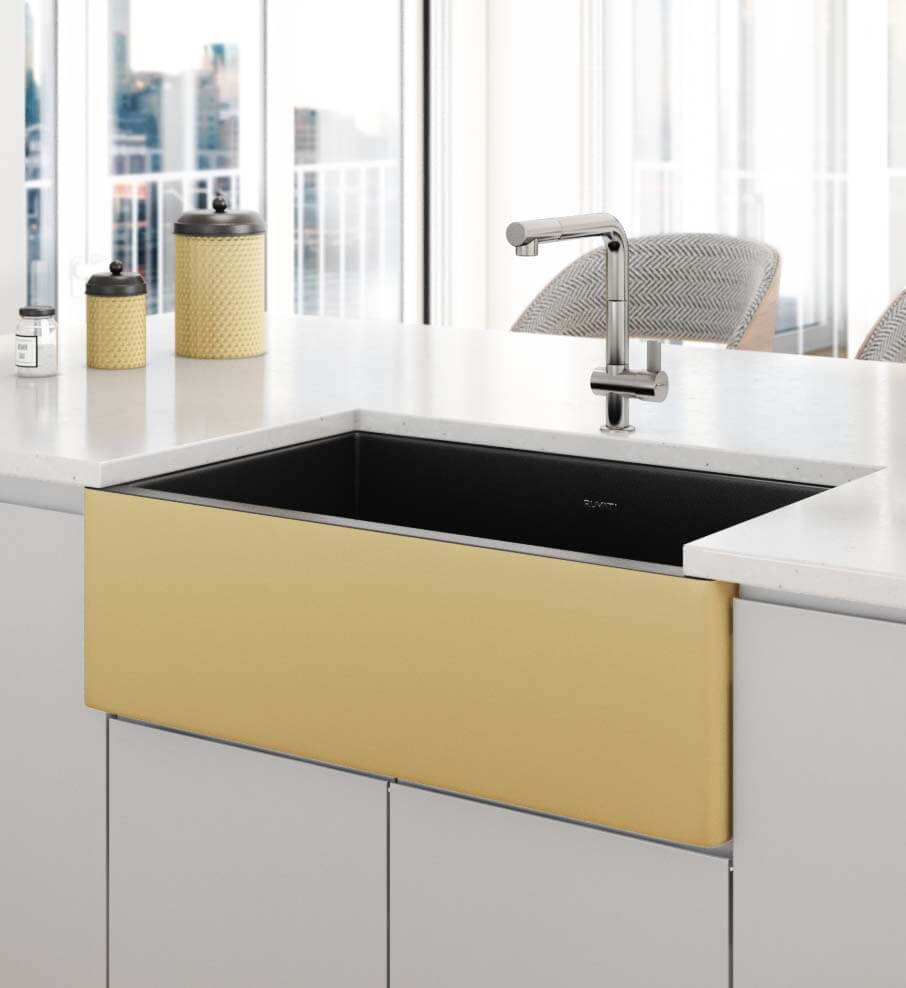

Like any other sink, your Ruvati epiGranite sink needs proper care. If you’re interested in cleaning natural stone sinks such as quartz or granite, you’re in the right place. This guide is packed with expert tips on maintaining your sink’s elegance. We’ll tackle daily cleaning, hard water stains, mineral deposits, and stubborn scuffs. You’ll learn what to avoid and how to prevent damage. Ready to become a pro at keeping your sink spotless? Let’s get started!
Understanding Composite Sinks
Before you dive into cleaning, let’s break down what composite granite sinks are and why they’re a popular choice for many homeowners. More specifically, Ruvati’s epiGranite is a blend of natural stone like granite, quartz, and resin, giving you the best of both worlds: the durability and elegance of a natural sink coupled with the easy care of a resin-based material. One can even argue that epiGranite sinks are much more durable and require far less maintenance than stainless steel sinks.
Understanding composite kitchen sinks can help you appreciate their unique qualities. Unlike traditional sinks, a composite sink combines high performance with high style. They’re built to resist scratches, stains, and chips, and their non-porous surface is hygienic and easy to clean. Besides their practicality, these sinks boast a sleek, sophisticated look that adds a touch of luxury to any kitchen or bathroom.
Tips to Clean a Quartz Sink or Granite Composite Sink
If you’re the proud owner of a Ruvati epiGranite composite sink, you’ll be glad to know that maintaining its pristine condition is relatively straightforward. Like any sink, it’s resilient but still requires a certain level of care. Here are some pro tips to clean your Ruvati sink effectively. Start with everyday care. Rinse the entire sink thoroughly after each use to prevent staining and buildup. Then, dry the sink with a soft cloth to avoid water marks. This simple routine is the backbone of adequately cleaning a composite sink.
Consider mild dish soap and non-abrasive cleaning tools such as sponges or brushes. Use a soapy water solution or a cleaner specifically designed for composite sinks such as Lime Away or CLR for a deeper clean. Apply the solution with a soft nylon brush or cloth, and remember to rinse thoroughly to avoid leaving any residue behind. Stubborn stains may require a bit more effort. A baking soda and water paste can be your best friend here. Apply it to the area, let it sit for a few minutes, then scrub gently with a non-abrasive brush or cloth. Rinse the sink and dry well.
Avoid harsh chemicals or abrasive scrubbers, as they can damage the surface of your sink over time. Remember that hot pots or pans should never be placed directly onto the sink surface, which could cause thermal shock and damage. With these tips to clean your many natural stone materials including quartz sinks not just granite. With this routine you can maintain its attractive look and functionality for years.
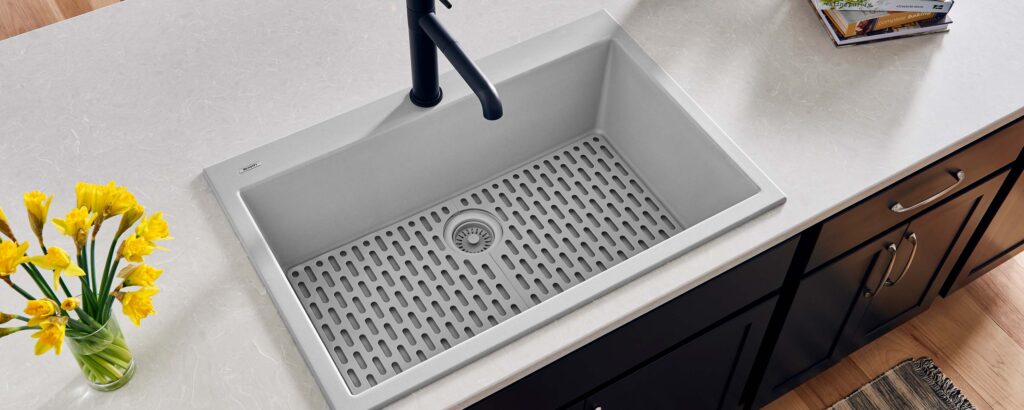
Important reminder: Always test any stain removers in a small, non-visible location
Tackling Hard Water Stains and Mineral Deposits
After mastering the daily care of your Ruvati sink, it’s time to tackle those pesky hard water patches and deposits that can dull its shine. Over time, these unwelcome guests can build up on your sink, leaving unsightly spots and a lackluster surface. But don’t worry; you can restore your sink’s sparkle with a few simple steps.
To start, you’ll need to gather a few items: white vinegar, a microfiber cloth or sponge, and perhaps a soft toothbrush for those stubborn areas. White vinegar is a natural and effective way to combat limescale stains and deposits.
Use a mixture of fifty percent vinegar and fifty percent water in a spray bottle for easy application. Spray liberally over the affected areas of your sink and let it sit for about 15 to 30 minutes. The diluted acidity in the vinegar will work to break down the hard water stains and deposits.
While the vinegar is doing its magic, use this time to dampen your cloth or sponge in warm water. Once the vinegar has had time to sit, use your cloth or sponge to scrub the areas. A soft toothbrush can provide a bit more scrubbing power for stubborn spots.
Rinse your sink thoroughly with warm water. Make sure to wash away all the vinegar to avoid any residual smell. Dry your sink using a soft, clean towel to prevent water spots from forming. Remember, this method is specifically for tackling hard water stains and should not replace your regular daily cleaning routine.
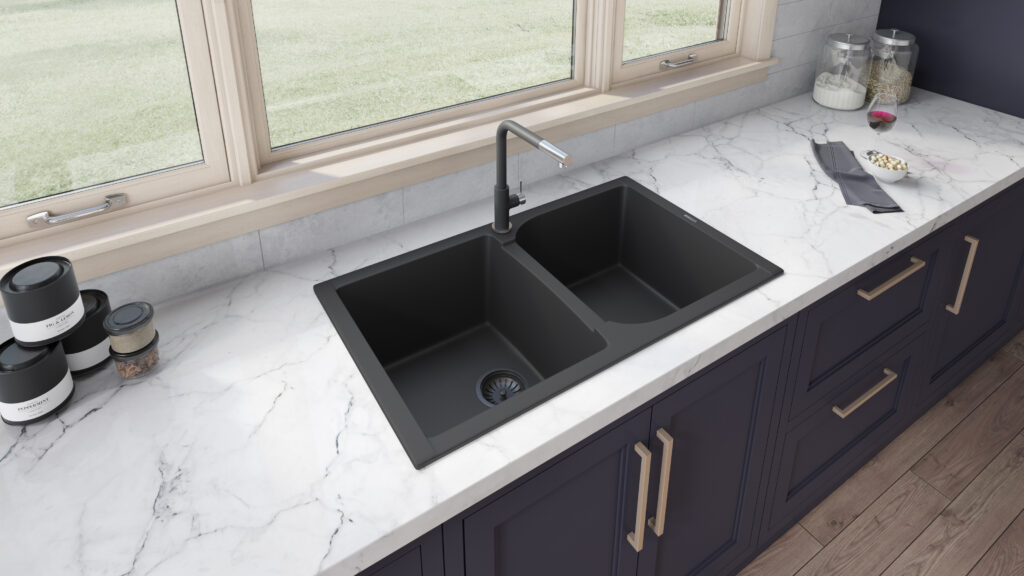
Special Care for Black or White Composite Sinks
When it comes to cleaning black or white composite sinks, there are some special considerations you’ll need to keep in mind to maintain their pristine appearance. The special care required for these sinks extends beyond the typical clean composite routine due to their distinct colors. Black composite sinks, for example, can show hard water and soap scum more readily than lighter colors. To counter this, clean your sink daily with a non-abrasive cleaner and soft bristle brush. This helps prevent the buildup of grime that tends to show more on black surfaces.
White composite sinks, on the other hand, can stain more easily. To maintain its sparkling appearance, promptly clean up any spills, especially those from dark liquids like coffee or red wine. A dedicated solution and nylon brush are crucial to prevent scratching the surface. Regardless of the color, avoid using harsh chemicals on your composite sink. They can damage the surface and dull the finish. Instead, opt for natural cleaning solutions, such as a paste made from baking soda and water. Lastly, rinse your sink thoroughly after cleaning and dry it with a soft cloth. This simple step will help maintain the shine and prevent water spots and deposits from forming.
Recap: Do’s & Don’ts for Daily Use
Do’s
Don’ts


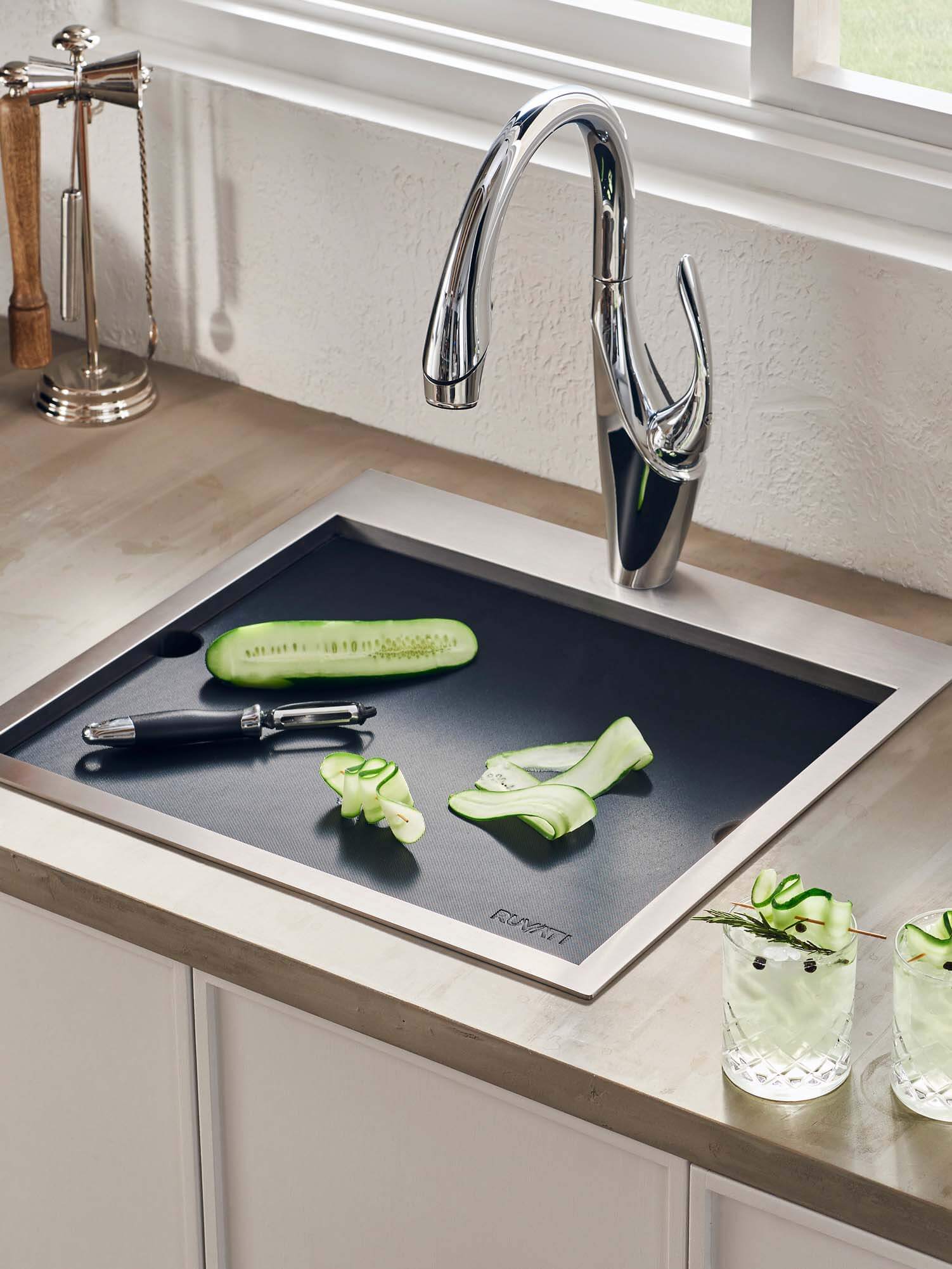


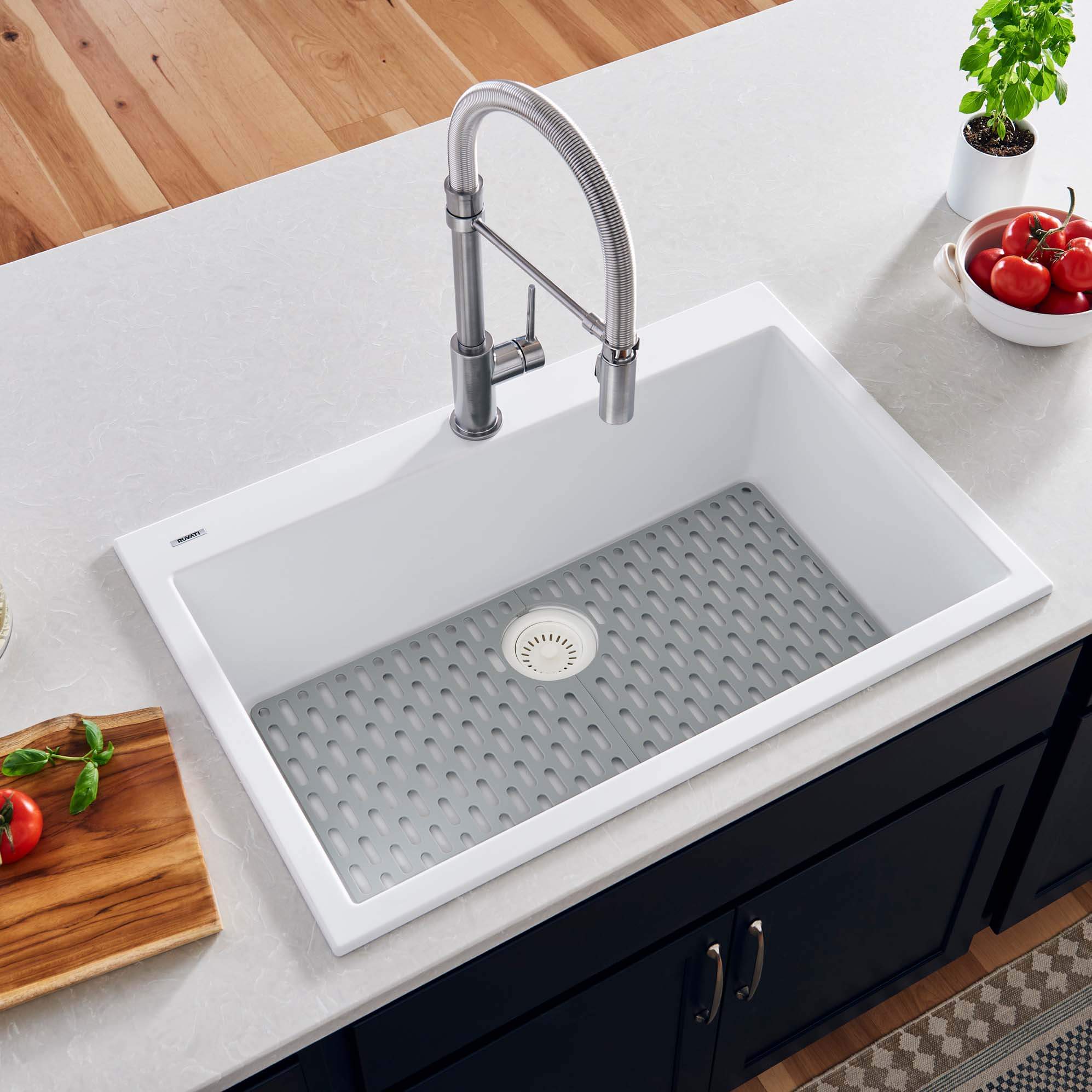
If you are looking beyond stainless steel and want to add some character to your kitchen design, granite composite sinks are an elegant choice.